Showing posts with label Asia. Show all posts

Tuesday, September 27, 2011

Photo of the week... month?


September 27, 2010
mani walls at the Deurali Pass, Solu-Khumbu, Nepal

This time last year, I was two days into a three week trek from the middle hills of Nepal up through the Himalayas and back again. When I returned, having neither had nor desired internet access for nearly a month, I found myself fielding quite a few questions about my whereabouts. I find myself now in a similar situation, though the adventure is quite different and accessibility is certainly not the issue. My friends, I have embarked on a quest called Grad School, and I'm afraid it has effectively sent me off the grid for awhile... just not in such a literal sense this time. I am pleased to say that after much wandering, I think I've ended up where I'm supposed to be after all.

This photograph was taken at the top of the first mountain pass on my trek, traversed on this day last year, which is oddly appropriate having just cleared the first major hump, hurdle, mountain pass, of my academic career. Ah, and like a ripe cheddar, it appears I've only gotten cheesier with time. You know you missed me.

I'll be back.

Saturday, August 6, 2011

A midsummer night's inspiration

"3 guys, 44 days, 11 countries, 18 flights, 38 thousand miles, an exploding volcano, 2 cameras and almost a terabyte of footage... all to turn 3 ambitious linear concepts based on movement, learning and food ....into 3 beautiful and hopefully compelling short films.....

= a trip of a lifetime."

 
Thanks to my Swiss Miss for sharing these incredible short films Eat, Learn, and Move (shot by Aussie Rick Mereki... who I keep wanting to call "Rick Moranis") that make me want to get up off my bum and LIVE.

Oh, and Andrew Lees- call me?


Friday, August 5, 2011

you know it is going to be a great day when...

...you can see the Himalayas from your window in the middle of monsoon season.


Confession: Today wasn't a great day... it probably wasn't even good. Internet service calls, frequent phone calls to the landlord about small but vital tasks that should have been completed weeks ago, staying put for nearly 7 hours to wait for an important UPS delivery that couldn't be left on an inner city stoop... these are the annoyances of getting settled into new digs. But at least I have electricity without rolling blackouts, hot water, and reliable internet (I think), right? Right?! Those are big important things I should be happy about, yes? (Lindsey, this is Baltimore, not Kathmandu- it's OK to adjust your standards).

A year ago, I came home from work in the morning to find this magnificent vista visible from the balcony outside my room. During the monsoon season, it is rare to get such a clear view of the Himalayas from Kathmandu (these particular mountains are part of the Langtang range), so catching such a panorama is the sort of moment that instantly brightens days.

With a few monumental, exciting, scary things just around the corner, I have found myself caught up in details, bogged down by small concerns rather than propelled forward by the tiny notions that can make one's day. I don't expect to look out my window and see 6000 meter mountains breaking through the clouds, but I know there are little day-makers amongst the daily annoyances. At the very least, it is still Shark Week.

Sunday, May 22, 2011

Sunday Night Souvenir: Nepalese Necklace


As I have mentioned before (though hopefully not ad nauseum... yet), shopping for unique jewelry is one of my favorite things to do while traveling. Realistically, when you get home, are you ever going to wear that dress that you bought for $3 in a Cambodian market, even if it was your go-to look across much of Southeast Asia? Or that edgy leather jacket that you spent a small fortune on in London that you just had to have even when it was too small and not really your style (a shout out to my sister)? Jewelry is perfect. Small enough that it doesn't take up room in your suitcase, it is the kind of investment that you just might hold on to forever and pass down to someone that shares similar genetics (who you can wow with your stories of world travel and Y2K). You are never going to gain or lose too much weight to wear a pair of earrings, and you never know when that wild necklace you bargained for on the streets of Bhaktapur is going to be the perfect statement piece for that little black dress.

While living in Nepal, I accumulated several such necklaces as personal souvenirs and gifts. The cost of purchasing small trinkets from local vendors is relatively low, and purchasing crafts can have a huge impact on low-income households that depend on such fickle business for survival. With those things in mind, I went through several periods where I was incessantly purchasing small crafts to bring home, such as necklaces and scarves, as it always gives me great pleasure to bring home gifts if my wallet and--possibly more importantly--my suitcase can afford them. Multi-strand beaded necklaces are traditionally worn by married women in Nepal (though such customs vary amongst the several different ethnic groups in the country). This is a different take on the beaded necklace-- one that probably exists more as an appeal to foreign travelers than as something commonly worn by Nepalese women-- with a large pendant inlaid with turquoise as the main attraction. It is bold, and though probably not suitable for most outfits, it is the perfect statement piece. Most importantly, though, it reminds me of a people and place that will forever remain close to my heart, cheesy as that statement may be.


Tuesday, May 10, 2011

Buddha's Birthday

Bongeunsa Temple in Gangnam, Seoul
May 10th of every year is special for being the birthday of somebody near and dear to me. May 10th 2011, however, is special to many people around the globe for being the birthday of Prince Siddhartha Gautama a.k.a. Buddha.

East Asian countries following the Chinese Lunar calendar (all but Japan) celebrate Buddha's birthday on the 8th day of the 4th month. For some, it is an event worthy of an entire month of celebrations, while for others, it is merely a day off work and an excuse to visit the local temple to take in the colorful displays of lotus lanterns.

My only direct experience with Buddha's birthday comes from South Korea. Even though only about 20% of the population identifies as Buddhist (close to 30% are Christian, while most of the remaining population do not identify as any particular religion), Buddha's birthday is a public holiday and is marked by celebrations at all of the major temples. Though I cannot speak for the other major cities in Korea, Seoul holds a big festival, typically the weekend before the official holiday, which culminates in a huge parade through the city. During the preceding month, colorful lotus lanterns are hung around temples and at strategic points throughout the city. The temples, gorgeous and peaceful during the daytime, become magical during the fresh spring nights when the lanterns are lit. It is truly one of the best times to experience Seoul, a brief sojourn into the world of perfect spring weather squeezed between the harsh winter and the oppressively hot, humid, and rainy summer. During last year's festivities, even though I had to get up and work at 6 am the following morning, I made myself get out to soak in the parade and the flawless night. Though I typically am not a fan of the crowds in Seoul, it was totally worth it. I'd love to experience this holiday again in another part of the world. But until then... happy birthday, Buddha!

The weekend before Buddha's birthday, there is a parade through Seoul starting near City Hall and ending at Jogyesa temple. Many people wear traditional clothing, like hanbok, to march in the parade.
festivities at Jogyesa temple
Buddha flies into Seoul in a glowing helicopter these days. 21st century Buddha.

Sunday, May 8, 2011

Happy Mother's Day: 7 continents of animal mothers


It's Mother's Day. So, naturally, I went to the far reaches of the globe internet to bring you these images of animal mothers and children. So go hug your mother. Call your mother. Make her some sangria. And if you think, oh shit, I forgot to send her a card or some flowers, go green and send an awesome WWF e-card to express your gratitude for everything mom has done for you, not limited to that time she let you spend 9 months living like a parasite in her womb.

Africa

Antarctica

Asia
 
Australia
 
Europe

North America


South America
http://animalsword.files.wordpress.com/2011/04/mother_and_baby_sloth.jpg

Happy Mother's Day!

images via, via, via, via, via,

Friday, April 22, 2011

happy Earth Day from some of the most beautiful places on the planet!

Chitwan National Park, Terai Region, Nepal
fields near Egeskov Castle, Funen, Denmark

Lake Champlain, Adirondacks, New York, USA
Arcadia, Greece
Manla Reservoir, Tibet
dawn near Great Smoky Mountains National Park, Tennessee, USA
sunrise over Sargamatha (Mt. Everest) and neighboring Himalayan peaks from Kala Pattar, Sargamatha National Park, Nepal

*please don't use my photos without asking/crediting me!

Thursday, April 14, 2011

happiness is...

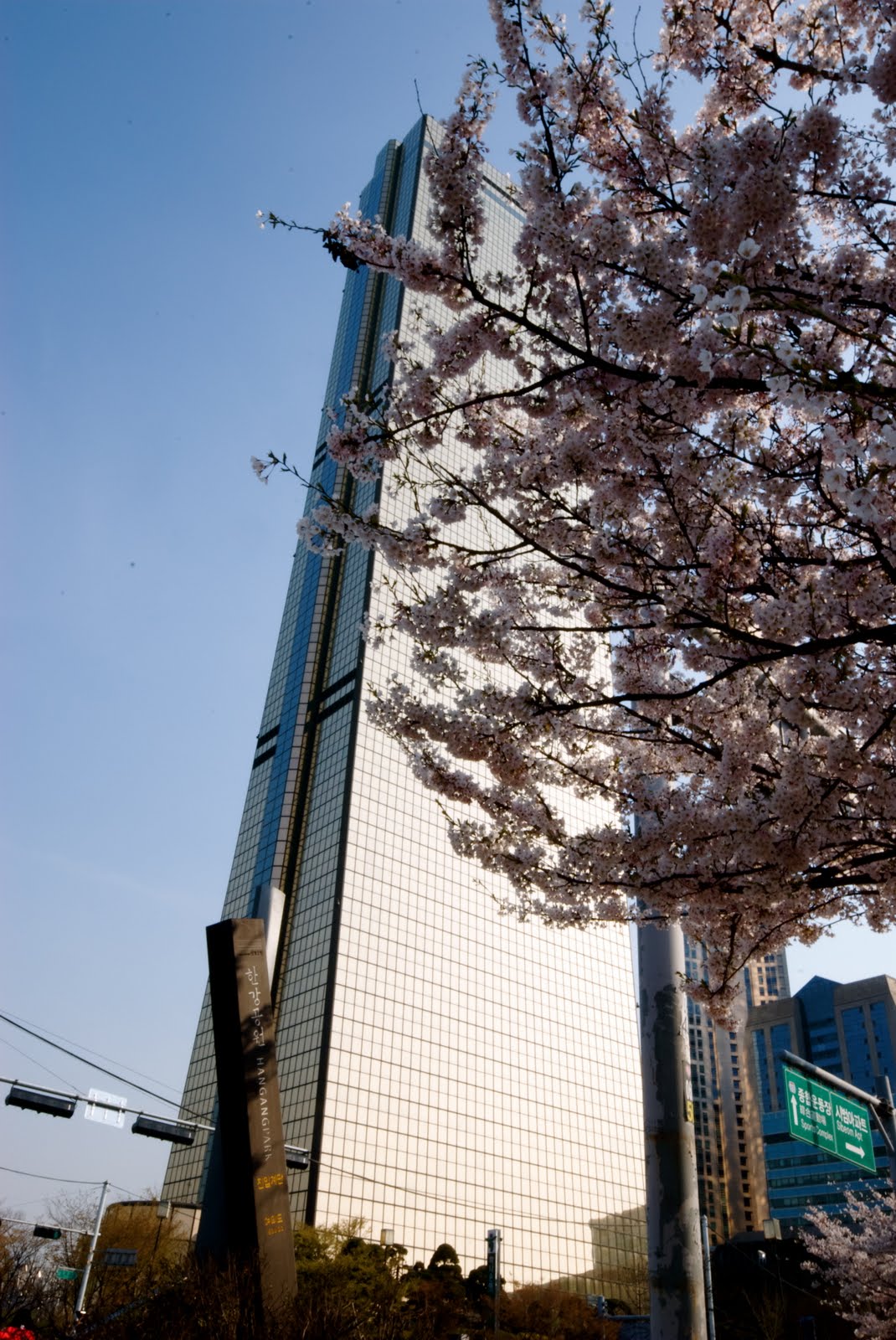
...cherry blossoms in the springtime.

Seriously, everyone always goes nuts for the cherry blossoms, with festivals popping up all over the world to celebrate their arrival... which always makes me inclined to say "ehhh, what's the big deal?"  But I'll admit that it brings me out of my winter funk a bit to suddenly see bursts of color emerging where barren trees had previously stood.

Cherry trees in bloom in front of the 63 Building in Yeouido- the tallest building in Korea

The island of Yeouido in Seoul is the best spot in the city to witness cherry blossom season and is always great for a walk or bike ride along the Hangang.  Right about this time last year, I was delighted to be brought back to the world of the living with the arrival of spring in Seoul.
(Yeouido is along Line 5/Purple- stop Yeouido lets you off near the National Assembly and close to the start of the festival, while Yeouinaru is closest to Hangang Park and the path along the river)

Wednesday, April 13, 2011

requisite biweekly shark post with a side of dog meat and ethical dilemmas

Kind of joking.  I never intended to post this frequently (now 3 times in 6 weeks?) about the cartilaged creatures, but here I am again (sort of... this post actually evolved to have almost nothing to do with sharks).

Galding posted an article yesterday using California's proposed ban on shark finning (a practice I previously mentioned here) as a launching point for a discussion of the global politics of culinary delicacies, which made me think a bit about my own experiences with food and culture abroad and at home.  The author raises the question of how to strike a balance between wildlife conservation/ethical food production and the preservation of culture.  While shark finning is a gruesome practice that for me is hard to justify with the argument that shark fin soup is integral to Chinese culture, there are other dishes that might not seem "ethical" to many "Westerners" that I have no problem with.  The author writes, "The Philippines has long been under fire for its mistreatment of dogs destined for the dinner table. I don't condone animal cruelty in any form (which is why I want to see gavage [sic]), yet we must also realize that pets are not a traditional part of that culture."  Just to clarify, the Philippines outlawed the eating of dog meat in 1998.  Though there is an underground market for it, most younger Filipinos did not grow up eating dog meat and think of dogs only as pets.  I'm really curious though as to what extent the doggie legislation came about through Western influences-- something that reminds me of a very similar issue in South Korea.

In Seoul, the capital city of South Korea, the sale of dog meat has been illegal since 1984, though the law is barely enforced and one doesn't have to look too hard to find dog meat in the city's traditional markets or in restaurants specializing in 개고기 (Gaegogi aka dog meat).  Hell, it took me less than a week of living in Korea to see my first frozen Fido.  Lindsey, my co-worker leaned in to warn me, you know some people here eat dog, right?  Moments later we passed a large dog in its entirety on ice-- and nowhere special, this was just the market closest to my home and workplace.  Many older Koreans continue to consume dog meat from time to time (especially men-- for stamina, of course!), but far fewer of the younger sect eat it with any regularity and many refuse to eat it at all on the same grounds as most Americans-- dogs are pets, not food.  But where did this shift in perception come from?  I'm willing to bet that most of the men that passed the law back in the mid-80's are part of the crowd that still visits their favorite gaegogi joint from time to time for "stamina soup."  If you remember correctly, Seoul played host to the Summer Olympic Games in 1988.  In talking to older Koreans (one of the distinct advantages of teaching English to adults), I learned a bit more about the historical state of dog meat affairs.  Apparently, in the years leading up to the Olympics, the government tried to phase out the selling of dog meat-- or at least run it underground-- in an attempt to appease the international (read: Western) community and shed the label of "backwards society that eats dogs."  At this point in time, South Korea was beginning to show significant signs of recovery from decades of poverty following the Korean War and was naturally eager to showcase its progress to the world during the upcoming Olympic Games.  They didn't need to be torn apart in the Western media for their culinary practices when their opportunity to become a bigger global player was on the line.  And so the visibility of dog meat quickly faded, and the practice has since steadily declined.

 Side note: I am Olympic Fanatic.

Is it fair?  What surprised me most upon seeing a full dog on ice in the market was its size and build  This clearly was not someone's pet; it was an animal bred specifically for one purpose: human consumption.  In Korean, these dogs are known as
누렁이 (Nureongi) and 황구 (Hwangu), clearly distinguishing them from the type of "dogs" that are considered pets.  For many, that still doesn't make it right, but I don't think you can point the finger at Asian communities for centuries of domesticating dogs as livestock while innocently consuming beef or chicken that comes from American slaughterhouses.  Cows are sacred to the Hindu community, and it is illegal to kill a cow in Nepal and most Indian states, yet Americans consume an average of 67 lbs of beef per year.  If the 1.4 billion people of India and Nepal got together and decided to vilify Americans for their consumption of cows, what would the response be?  Many people would probably laugh at the audacity of the two South Asian countries for suggesting such a thing.  So why does the West get to decide what is globally acceptable at the dinner table? (and I ask that with regard to food production only and issues of conservation aside-- as I do think it is important that global measures are being taken to protect threatened and endangered species)

So what is my personal philosophy on food, culture, and ethics?

I absolutely draw the line at threatened or endangered species, especially when many of them are killed not for survival, but for sale as delicacies, often wasting most of the edible parts of the animal and leaving them to die a cruel death, the way sharks are definned and then thrown back in the ocean to perish.  As a somewhat recent fish consumer, I'm working to become more knowledgeable about sustainable fishing, as I would like to get the occasional super dose of omega-3's without contributing to the destruction of our fragile ocean ecosystems. 

After that, the lines are hazy.  I have been trying to become a more conscious consumer.  For both health and ethical reasons, I eat significantly less meat than I did in the past, and when possible make more responsible decisions when it comes to the source of my food.  My personal decision not to become vegetarian or vegan has a lot to do with culture as well as the belief that one doesn't have to go to extremes to be more responsible or make a statement.  

First off, culture.  Anyone who tries to convince me that food is not an integral part of culture will ultimately fail.  We experience the world through our perception of sensory details, and what, other than the experience of eating and drinking truly uses all of our senses?  If you think back upon your childhood, how many memories feature food to some degree?  If you've traveled, can you honestly say that the experience yielded no culinary memories?  Travel has become a huge part of who I am and I would be remiss to claim that food is of no importance to my appreciation of different cultures.  Whether this means enjoying a buttery fresh baked croissant early in the morning while ambling through the streets of Paris or eating raw octopus on the Yeongmeori coastline of Jeju-do straight from the haenyeo (traditional female free-diver) who caught it, I don't want to limit my experience through a narrow definition of what constitutes acceptable food.  But there is also another, more direct cultural experience that concerns me.  At many times over the past year, I have been a guest at the dinner table, experiences that I am overwhelmingly grateful for and that rank as some of my fondest memories of time spent abroad.  Aside from wanting to be polite and try everything offered, there have been times when the meal I have been served as a guest is considerably more expensive than what the host would normally cook-- how can I possibly eschew the relatively expensive chicken that I am being served on ethical grounds knowing that my gracious host will go back to a diet of rice and lentils for weeks to compensate?  I just can't.  When my host has her husband go miles out of the way to pick up special curd from another town for dessert, how do I refuse it and explain that I do not eat any products that have in any way derived from animals?  I don't.  I can't.  Not only does it not translate to the majority of humans around the globe, but getting on my ethical high horse in that sort of situation just doesn't seem right.  


 eating octopus by the sea, straight from the woman who caught it, right next to where it was caught- doesn't get much more local than that, right?

I know it is not every day that I'm in a situation that demands those decisions of me, but I am not really keen on undertaking a lifestyle of extremes such as veganism knowing full well that time and again I will make exceptions in the pursuit of understanding and respecting other cultures.  Nor do I think that eating healthy and ethically has to come in the form of extremes, as it only serves to further alienate the majority of the population who cannot afford such a lifestyle.  Millions of Americans struggle to get enough fruits and vegetables in their diets-- not because they are ignorant or lazy, but often because the things that are heavily subsidized by the government (corn, meat, processed dairy) are more affordable and more filling, despite how nutritionally poor and lowbrow on the foodie scale they may be.  Healthy and responsible eating should not have to be expensive, divisive, or elitist.  But if the poor keep eating poorly
based on the few affordable choices they have (and looking at the factors for beef consumption in America, geography, income, and race have a significant impact on who relies most on meat in their diets) and the rich who can afford to make food choices that reflect how "socially conscious" they are continue to buy into their exclusive diet and lifestyle clubs, what will change?  What incentive (other than it being the responsible thing to do) does the government have to correct the subsidies that encourage these unhealthy behaviors?  What incentive do companies have to target health foods at a wider population and offer them at more affordable prices when they already have a faithful elite that keep them in business by paying top dollar for organic-local-vegan-status-symbol products?  There really isn't much.  In this way, I think the small changes have the potential to be most effective.  If enough people start to be a little more discriminating about what they put into their bodies, I believe it can have a much stronger impact than if a teeny tiny fraction of the the population decides to cut out entire groups all together.

I've rambled a bit, from shark finning and dog meat to culture and American diets.  Things got out of hand.  Food is fascinating, isn't it?


I'd like to just end with something that I read awhile ago on my friend Andy's blog, which really seems to sum up the conundrum I face balancing health and social responsibility with respect and appreciation of culture when it comes to food:
Eating nutritious and local food is important to me, but I don’t want to turn my back on culture to do it.  Truly experiencing food is what I’m after, and if that calls for settling for imperfection here and there, bring it on. In a perfect world, we’d all grow turnips in our backyards and eat them like candy.  In a perfect world, our farmers would tell us what to eat, not our televisions.  In a perfect world we’d all be eating well.
Truthfully, I’m happy with eating goodly.*
*Eating Goodly is the name of Andy's blog- as a future Master of Management in Hospitality student at Cornell, I assure you he can get away with making up words to make a point.  For some thought provoking posts on food (from ethics and culture to darn good french toast and beer), I encourage you to check it out!

Tuesday, April 5, 2011

something doesn't quite fit (Bangkok)

The Loha Prasat pagoda--or Iron Monastery--within the Wat Ratchanatdaram Worawihan temple complex is an anomaly in the Thai temple architecture scene and the only one of its kind in the world after two similar structures in India (on which the temple was modeled) burnt to the ground.


It is also a great place to grab a cold beverage.


Just kidding.  I've always been a Coca-Cola gal. 

Monday, April 4, 2011

travel inspired recipe: banana avocado smoothie (Philippines)

After nearly a week of roaming off the tourist trail in search of whale sharks and a more authentic Filipino experience, I set off for Boracay, the part of my travels that would function as a real vacation from my hectic life in Seoul: six days of diving, relaxing, and taking myself out to dinner (with Infinite Jest as my date) on a picturesque (yet über touristy) tiny island north of Cebu.  While lounging on White Beach won't get you a glimpse of the real Philippines-- just a portrait of how the natural jewels of the 7,107 island nation are being harnessed by the tourism industry (not necessarily a bad thing, as it is a major source of revenue and provider of jobs)-- it will give you access to countless opportunities for water sports, dining out, and nightlife (if you are into that kind of thing and wouldn't rather return to your room for a quiet night with a good book-- I won't judge).

Boracay's White Beach in the morning, with high tide during the full moon pushing further and further up the beach

One of my favorite things in the world is fruit-- especially of the tropical variety.  I had already delighted in the purchase of mangoes in the Sorsogon City markets (at several for a dollar instead of one for several dollars I didn't care if I made myself sick on mangoes, dammit, I was going to get as many in as possible!), but now it was time to enjoy fruit of the blended variety.  Enter Jonah's Shakes, a Boracay staple with around fifty varieties of blended goodness to choose from (though some options were frequently unavailable-- bad when you have your heart set on something, but never really that bad with a bajillion other delicious combinations to choose from).  With my minimum once daily fruit shake, I did a lot of sampling-- go tos like mango and melon varieties naturally did not disappoint, but one in particular that I was not prepared to like turned out to be a big hit with my taste buds: Jonah's banana avocado shake.

If you are anything like me (or my mother recently when she heard I was trying to recreate this), you might be thinking that putting avocado in a smoothie sounds disgusting.  Hear me out.  The avocado and banana pair brilliantly and make for a refreshing and incredibly filling protein and good-fat-packed drink.  I've been experimenting with it over the past couple days, and it has been a great thing to wake up and make on the weekend as a light meal replacement before running off to yoga in the morning.

Banana Avocado Smoothie:

1 ripe banana
1/4-1/2 avocado (the avocado's I've used recently have all had a lot of brown spots that I haven't used, so while I originally intended to use half, I realistically only used 1/4-1/3 of the fruit)
1/2 cup milk
1/2 cup ice
sweetener of choice, to taste
I usually also throw in about 1/4 cup water- you can always add water or more milk to your desired consistency

blend until smooth, enjoy while pretending you are sitting on a tropical beach (totally normal)

Sunday, March 27, 2011

Sunday Night Souvenir: shopping Bangkok's Chatuchak Weekend Market

If markets are your thing, then browsing the Chatuchak (Jatujak or JJ) Weekend Market in Bangkok is probably a must, as it is the largest market in Thailand.  Even if you are not looking to buy anything, the sheer size is impressive and there is plenty of nomming to be done.

this is not a great photo at all, but whatevs, I was too busy shopping and nomming on everything in sight

As I would be traveling on and could not afford to spare any room in my bag, I didn't have much place shopping at the JJ, but I did manage to score some some tiny trinkets.  I bought two pairs of fantastically wild earrings at 50 baht each and spent another 30 baht on a large (but weightless, so still practical enough!) bag of lemongrass, suitable for tea-making.  Lemongrass tea was something that I came to look forward to after a long day of massage school, and while the citrus flavor makes a great addition to both black and green teas, it can also stand on its own as a purely herbal drink.

Some of my friends would probably give me a hard time for these additions to my eclectic earring collection, but they clearly don't know what they are missing.  I love the combination of colors and the wire coiling in both of these.

though I can't claim that these are made entirely of precious stones, I can't argue with paying just over $3 for two pairs

Another great thing that I picked up from a street vendor during my stay in Bangkok was a sturdy embroidered bag that was perfect for schlepping my stuff around during my three months in Nepal.  I can't tell you how great it was to have something large and durable enough with the safety of a zipper to carry around a heavy DSLR, water bottle, book, etc. all over the place.  And bright.  Very situationally appropriate.  I think I'm starting to miss the bright colors of Thailand and Nepal...

here I am awkwardly posing in a photo that was originally about the gorgeous scenery of the Kathmandu Valley as seen from a hilltop monastery, but has now been cropped down and made all about the bag I'm carrying.  And how hot is my Speedo watch?  Even hotter= the bright orange Princess Jasmine (slash harem) pants that I have conveniently shielded your eyes from.
 

Thursday, March 24, 2011

Thursday Thai: litterulae from a Bangkok cab

While cabs are often not the ideal method of transportation in Bangkok due extreme congestion on the roads (try the river boats or the sky train when possible), they are cheap, and sometimes the best option if you traveling beyond the bounds of water and sky.  If you are staying in a big tourist hub, particularly Khao San, many cabbies might try to fix a rate before hand.  It might seem like a great deal, especially if you have just arrived in Southeast Asia, but the fixed rate they demand will usually be at least double the metered fare.  Ask them to run the meter or find another cabbie that will.


From what I could tell, this was my VIP cab ride to karaoke (noraebong!), gambling, booze, hookers, and sodomy.  Unfortunately, I only utilized it to get home faster for much needed sick nap time.  My loss, I guess.
_____

In other news...

I'm tres excited that my La Mer watches have arrived!

fantastic post about girl guilt from The Sexademic

Wednesday, March 23, 2011

wat is the wat?

As two friends of mine are soon meeting up in Bangkok to commence their envy-inducing peregrinations of Southeast Asia, I thought I'd take a moment (or a few posts) to reminisce about my time spent in Thailand on two separate occasions last year.
______

Menacing clouds roll over the Wat Pho temple complex.  Intermittent downpours are to be expected during the summer monsoon season-- my mid-July jaunt was no exception.

Wat Pho was beyond a doubt my favorite of the traditional sights in Bangkok, which was fortunate since I spent nearly every day of my week in the city at the Wat Pho Thai Traditional Medicine School earning my certification in Thai massage.  I'll delve more into my escapades in masseuse boot camp another time, but I'll have you know that I can massage like a champ.  And Thai massage is not for sissies-- done in full, the standard procedure takes about two hours to complete, which amounts to quite a workout for the masseuse as well as the recipient (some liken the benefits to completing a yoga class).  Wat Pho is the place to learn the art of Thai massage, and people come from far and wide to learn the Thai Traditional Massage treatment (yours truly included).

But back to the temple complex itself.  For those of you who might not be onto this already, wat means temple in Thai.  Another helpful hint for Thai is that in the Romanized spellings of Thai words, "ph" is pronounced like a hard "p," not an "f" (Wat Po, not Wat Fo).  I also happen to think that written Thai is gorgeous.  Spoken Thai, not so much.  Wat Po is actually just a nickname given to Wat Phra Chetuphon, the largest and oldest Buddhist temple in Bangkok.  In English, it might also be referred to as "the temple of the reclining Buddha."  From this, you might (correctly) assume that there is a reclining Buddha located somewhere within the temple-- in fact, the temple houses one of the largest Buddhas in Thailand at 45 meters long.  Over one-thousand additional Buddhas lie on the premises, which is great if you are into BuddhaBuddhaBuddhaBuddhas rockin' everywhere.

 Oh hai.  I'm a BFB.  Big Fuckin' Buddha.

What makes Wat Pho so special in my mind are the intricacies found in every corner of the sprawling complex.  From the spectacular ceramic detailing covering every inch of the temple's 95 chedis to the mother-of-pearl inlaid in the reclining Buddha's feet to depict the 108 auspicious characteristics of the Buddha, you could return to Wat Pho every day and still discover new features that managed to elude you on previous visits.  As half of the duo that will be in Bangkok shortly has a background in graphic design and tends to document interesting patterns in her travel photographs, the elements of this temple complex are sure to please.

Within the hall of the reclining Buddha, you can exchange a nominal amount of money for a bowl of tiny coins, the idea being to drop one in each of the bowls lining the walk to the exit-- no doubt to provoke some sort of cosmic blessing.  When I ran out of coins with several bowls to go, I wondered if I was sending a sort of nefarious smoke signal up to the heavens, however unintentional it may be.  Though I shrugged it off and walked on, I can't stop thinking about how I managed to fall incredibly ill the following day, spending the majority of massage school in a fevered delirium.

While the cause of my sickness is up for debate, Wat Pho's exceptional beauty is not.  Enjoy!

 clockwise from top left: I miss the ever-present vibrant flowers of Thailand; graceful ceramic details of a chedi in the foreground, the glowing opulence of a temple building in the background; a rather large toe; temple belfry; the long legs of the BFB (big fuckin' Buddha); corner of a building ornately decorated with glowing glass and mirrors; coins for good luck; a sage old man keeps watch over the wat

Practicalities:
-Wat Pho is located in the old city, right by the Grand Palace.  If you are staying near Khao San Road (the main backpacker haven), it is easily reached by walking or taking a cheap cab (about 45 baht- make sure the cabbie runs the meter) or tuk-tuk.
-Entrance fee is 50 baht.
-A Thai massage will be more expensive at Wat Pho, but at about $11/hr vs. about $8 or so on the street (maybe less, maybe more- probably about $9 or so on Khao San), you might want to be able to say that you've gotten a massage at the ultimate traditional Thai massage mecca.
-Get there early-- everything in Bangkok is better before the crowds and the stifling humidity! 

Thursday, March 17, 2011

a moment of silence for Japan

I'm not really sure what to say in the wake of the tragedy that Japan has been dealing with for the past week.  The last funeral I attended saw me smiling a lot at the relatives that I hadn't seen in years before realizing that smiling probably betrayed the thoughts I had of sadness and loss and was not the most appropriate face to showcase at such an event.  So here I am, trying to make sense of the incredible losses that the Japanese people are suffering right now, and my only response is to say nothing.  Tomorrow, I'll be participating in the Blogger's Day of Silence out of consideration for the multitudes of losses the Japanese have suffered and in support of some of the ongoing disaster relief efforts.

forjapanwithlove_blog1 

I will say this.  On two occasions while living in Korea last year, I had the wonderful opportunity to visit Japan.  I found the country beautiful and the people incredibly warmhearted.  Friends of mine that worked in Japan often remarked on the kindness of their Japanese coworkers who made them feel welcome and made an incredible effort to share with them their culture.  

I'll never forget arriving at Kawaguchiko Station near dark on July 1st of last year.  The previous day I had taught my last day of class and packed up my apartment to move out.  Earlier that day I had scrambled to get the rest of my belongings out of the apartment and to a friend's house for storage while I got out of town for awhile, rushed to make my afternoon flight, frantically walked around the overwhelming Shinjuku Station (the busiest train station in the world) looking to catch the bus to the Fuji Five Lakes area, and finally found myself walking alone in a dark, quiet town searching for the hostel where I was to meet a friend.  Tired and still unwinding from the stress that had accumulated over the past month, I passed a man on the side of the road near his apartment building and asked if he could point me in the right direction.  Instead of pointing down the road, he pointed to his car and insisted that I accept a ride.  It was only a short ride, but it was a really nice thing to offer.  His wife and adorable kids were there, and I'm sure that everyone had been eager to get home for the night before some random foreigner arrived.  It is the kind of thing that I wouldn't expect many people to do in the US-- and I think we have been conditioned from a very young age to think that accepting such an offer from a stranger will ultimately lead to a ghastly demise-- and yet in Japan, it seems really normal.  People really are just that nice.

I send Japan all my love, and for the next 24 hours may you hear the sound of my silence.

Monday, February 28, 2011

exposing myself to Korea

When I arrived in Korea on my one-year working visa, there were a few strings attached.  Aside from shipping away my diploma and a medley of notarized documents to Seoul prior to my arrival, there were a few things that needed to be taken care of upon touching down fourteen time zones into the future.

Lest they allow any impure mudblood foreigner taint their aseptic culture, immigration requires a thorough physical of all foreign visa holders (or "body check" in creepy Konglish).  Fail this, and they send you packing.  For visiting foreigners (who from most countries are granted a 90-day tourist visa), HIV disclosure is not mandatory.  If, however, positive HIV status is revealed, you'll be given the boot.  For all foreigners on working visas, blood work is done ASAP to confirm negative HIV status.  While this is a questionable human rights issue that makes me feel a bit uneasy, countries do have the right to make their own immigration laws, and S. Korea is not alone in requiring HIV testing for prolonged stays.  In fact, until 2010, positive HIV status could restrict entry to the United States (though immigration did not test for it, failing to disclose positive status could be considered "immigration fraud").  While it is still considered a "communicable disease of public health significance," HIV no longer bars individuals from entering and residing in the United States, which is a considerable step forward as we increase our understanding of the disease and aim to reduce the stigma surrounding it.

In addition to HIV tests, they require a few gallons of urine for, among other things, extensive drug testing.  In reality, it is more like a pint, but it sure feels like gallons when you are nervous, dehydrated, and trying to aim to fill a cup and several test tubes while straddling a squat toilet.  As I was particularly inept when it came to squat toilets (oh what a difference a year would make), this also required partial undressing as to avoid reeking of urine throughout the rest of the day with three hours of class left to teach.  My heart went out to the friend with the childhood fear of soiling his clothes that to this day requires him to completely undress to take a shit, a task made particularly difficult in business attire.  I would undress, squeeze out a few drops, get dressed, wash the cup of urine that I was about to stow in my pocket, and hit the vending machine for yet another cup of coffee.  The staff member that brought me to the hospital would call to wonder if I had left without her, and I would inform her that I regrettably had yet to produce an ample enough urine supply.  My so-called "diuretic" would fail me once more, and I'd be left to contemplate my performance anxiety and start the process all over again.

And I haven't even gotten to the good part.

Immigration also wants to make sure that you don't have TB.  Instead of doing a tuberculin test, they run a chest X-ray.  I was led down to radiology by an English speaking aspiring med student volunteer who instructed me to take off all my clothes, including underwear, and slip into hospital attire.  No problem... except that they only are providing shirts.  Now I know there are a lot of 4'10" adjummas running around, but this thing really seems to short to be intended for use as a gown.  So I asked for pants.  "No pants."  Wait, whattt?  This girl definitely understands English.  But I ask again.  "No pants."  I peek outside the curtain I am changing behind.  In addition to the technicians and my volunteer, there is a room full of old Korean male patients.  All wearing pants.  Now I've only been in this country for a week, and I am pretty sure that modesty, particularly between men and women, is a pretty big deal.  But maybe there is a different standard that applies in a medical setting, kind of like how people casually talk about having diarrhea as if it were a headache.  So I brace myself to bravely Pooh Bear a room full of strangers.  I'll never see them again, right?  For those of you who don't know what I mean when I use "Pooh Bear" as a verb, let me remind you of what Pooh Bear looks like.  More importantly, what he wears:

hello, world!  isn't life better without the constraint of pants?

I mumbled a lot of incoherent words about seeing a lot of my ass and nervously penguin waddled out from behind the curtain.  Volunteer stares at me awkwardly and tells me I can keep my pants on.  But you just told me several times not to wear pants, you sadistic fuck.  Oh, I technically was never wearing "pants" because I was wearing a skirt.  Kill me now, I just Pooh Beared a room full of strangers.


Related Posts Plugin for WordPress, Blogger...